Marine businesses have always relied on strong relationships, seasonal demand, and word of mouth. Now the industry is moving through a major shift. Buyers are researching more online, comparing services faster, and expecting immediate answers. This change has pushed marinas, boat dealers, repair shops, charter companies, and marine service providers to rethink how they market themselves.
Artificial intelligence and automation are playing a large role in this shift. These tools help businesses understand their audiences, communicate more efficiently, and reach customers at the right time. For many marine companies, it means marketing becomes easier to manage and more effective, even with a small team. It’s important to note that AI supports the work but doesn’t replace the team running the strategy, managing the ads, or guiding decision making.
Below is a look at how these technologies are reshaping advertising strategies and how marine businesses can use them alongside hands-on expertise.
AI helps marine businesses understand customer behavior
Marine customers have specific needs. A boat buyer wants different information than someone looking for a storage slip or a haul-out service. AI tools help sort these differences by analyzing online behavior and identifying patterns in what people search for, read, or click. This helps businesses create ads and content that match what each group is interested in.
AI can support this in several ways:
Predicting which services a customer is likely to need next
Identifying search trends for boat sales, repairs, maintenance, rentals, fuel, and storage
Highlighting the best times to run ads based on activity levels
Organizing leads into more accurate segments for targeted outreach
These insights help marine companies avoid guesswork. The tools surface the patterns, but the marketing team uses that information to shape the strategy and decide how to position each service.
Automated ad campaigns reduce workload
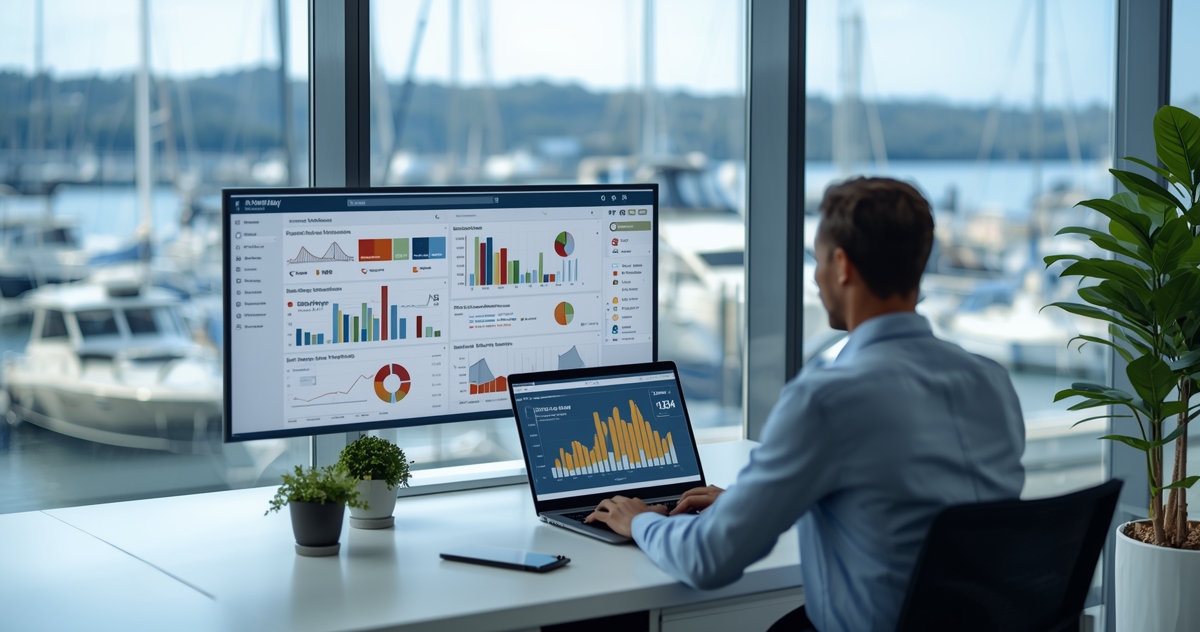
Running ads takes time. This includes choosing keywords, setting budgets, monitoring performance, and adjusting bids. Automation tools handle many of these tasks using real-time data. They can shift budgets or pause underperforming ads without waiting for someone to log in.
For marine businesses, this brings several benefits:
More efficient ad spending
Faster adjustments based on weather, seasonal shifts, or spikes in demand
Improved results with less daily monitoring
More time for staff to focus on operations
While the tools handle repetitive tasks, the ad strategy, performance oversight, and optimization still depend on human management. AI assists, and the marketing team makes the final calls.
AI-powered content helps marketing stay consistent
Marine companies often struggle to produce regular content. Writing articles, social posts, and newsletters can feel overwhelming when the focus is on boat sales, repairs, rentals, or marina operations. AI tools help by generating outlines, ideas, and draft text that the team can refine.
This improves consistency in areas like:
Clearer, more informative service pages
More frequent blog posts that improve search visibility
Steady email marketing
Regular social updates, even during busy months
These tools give a head start, but the voice, accuracy, and final messaging come from experts who know the marine industry.
Chatbots improve customer communication
Marine businesses get a high volume of inquiries. Customers ask about slip availability, rental rates, boat inventory, maintenance timelines, and more. Quick responses matter because people often contact multiple providers.
AI chatbots can help manage common questions. They can share basic information, collect contact details, and guide visitors toward the right service. When a question needs a personal response, the chatbot hands the conversation to a staff member.
This leads to:
Faster replies
Fewer missed leads
Better organization of incoming inquiries
A smoother experience for website visitors
Chatbots support the workflow, while the team handles real conversations and decisions.
Automation helps manage email marketing and follow-up
Follow-up has a major impact on conversions. Someone who downloads a brochure, asks for pricing, or checks slip availability may be close to making a decision. Automation helps maintain consistent communication with these warm leads.
Automated email sequences can:
Send welcome messages
Share helpful service information
Remind customers about maintenance timelines
Encourage seasonal bookings
The tools keep the communication steady, and the team shapes the messaging and reviews performance.
AI improves local SEO and visibility
Marine customers usually search locally. They want marinas near a coastline or lake, highly rated repair shops, or charters in a specific region. AI-driven SEO tools help by analyzing keyword trends, reviewing competitor activity, and pointing out content gaps.
Businesses benefit from:
More traffic from people searching for local services
Better-optimized service pages
Keywords aligned with real search behavior
Stronger map and local listing performance
The tools provide data. The team interprets it and decides how to improve the site.
Predictive analytics support smarter planning
Seasonality and weather influence nearly every part of the marine industry. Predictive analytics tools estimate how demand may change based on historical patterns. This helps with planning for advertising, inventory, and staffing.
Examples include:
Identifying when boat sales may increase
Estimating storage demand
Predicting repair volume after seasonal weather changes
Allocating marketing budgets more effectively
The insights help guide decisions, but human judgment remains central.
Personalized advertising becomes easier
When ads feel more relevant, customers respond better. AI supports personalization by tailoring messages to user behavior and location. Someone who browsed boat listings might see financing options. A visitor who checked service packages may see ads for maintenance.
This creates:
Higher engagement
Better use of ad budgets
A smoother path from interest to inquiry
AI makes personalization possible at a smaller scale, but the marketing team controls how the messaging is used.
AI supports video marketing
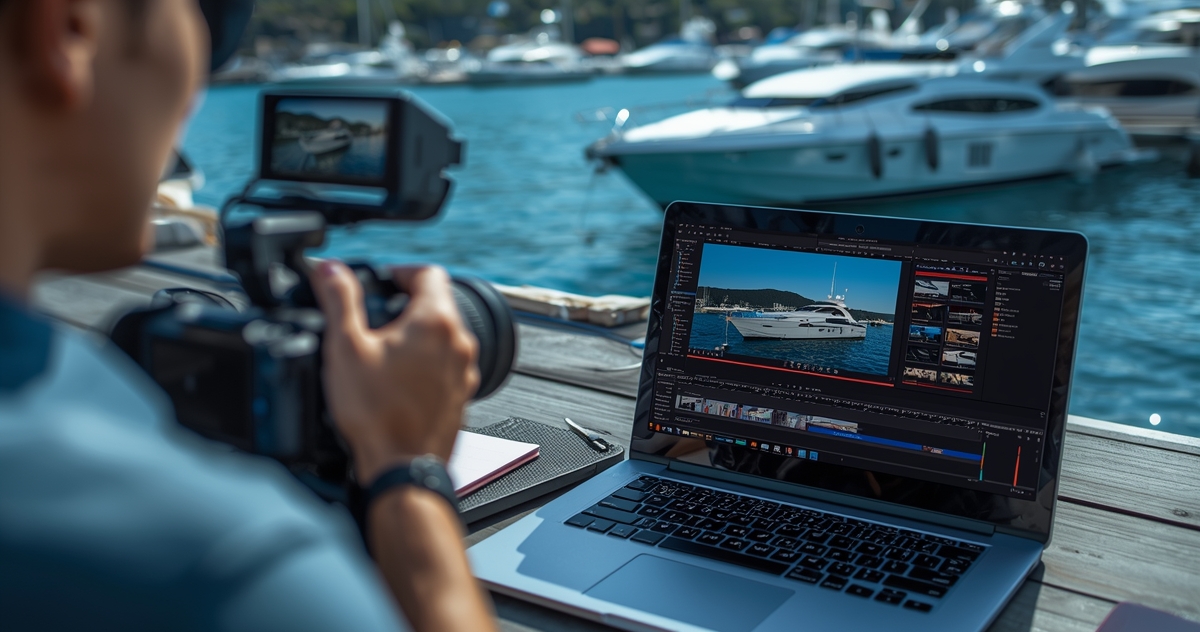
Video content works well in the marine industry. Buyers want walkthroughs, demonstrations, and close-ups. AI tools help by organizing clips, suggesting edits, and generating subtitles.
This helps companies:
Produce polished videos faster
Create walkthroughs for multiple listings
Break long videos into short social clips
Improve visibility on video-friendly platforms
Again, the tools help with the process, and the creative direction comes from the team.
The future of marine advertising
AI and automation will continue to evolve, offering more ways to support marketing efforts. We may see better forecasting tools, more advanced chat features, interactive virtual tours, and deeper customer insights.
What won't change is the need for human expertise. Marine businesses know their customers and local conditions better than any tool. AI helps expand that knowledge and make marketing more efficient, but the strategy and decision making remain in the hands of professionals.
By combining industry experience with modern technology, marine businesses can stay competitive and build stronger connections with customers who expect quick answers and clear information.
If you want to learn how these tools can support your marine business, visit https://www.harpoonmarketing.com.